Ostia Antica

Why do the long haul down to Pompeii and Herculaneum when you have this wonderful alternative just outside the city?Ostia Antica, the impressively preserved port of the ancient city. The Med is now two miles away but for well over 600 years, until its decline in the fourth century AD, Ostia buzzed with maritime trade from the whole immense Empire.
The decumanus maximus (main street) leads through the site to a theatre, a cosy communal toilet block, a forum where trade guilds' emblems appear on floor mosaics, and houses with first floors still partially intact. My favourite bit is the ancient bar-restaurant, with the day's menu still frescoed on the walls. The Roman theatre is still used for plays and concerts during the summer months.
Viale dei Romagnoli 717
San Carlo alle Quattro Fontane

What an architectural marvel San Carlo is! Enter this ingenious little church, by Baroque maverick Francesco Borromini, and you'd hardly guess that the whole footprint was the size of one of the pilasters of St Peter's (this is why locals refer to it affectionately as San Carlino - 'Little Saint Charles').
The tortured, bipolar architect twisted lines and space to such an extent that volumes seem to appear out of nowhere in this oval creation, lit beautifully by high windows. There's a tiny courtyard with perfectly proportioned Corinthian columns. And when the monks are in the mood, they'll show you their extraordinary library too.
Via del Quirinale 23
Another miniature Borromini masterpiece, is the vertiginous church of Sant'Ivo alla Sapienza.
Corso Rinascimento 40.
Protestant cemetery

That Keats and Shelley should be buried in this lovely place beneath the shadow of Rome's only pyramid is particularly fitting: the cemetery is hopelessly romantic. It was my green refuge of choice when I lived just down the road in the Testaccio district. The cemetery grew up here because it lies 'beyond the pale', just outside the town walls. Non-Catholics struggled to be allowed a burial in papal Rome, and even after this patch of land was granted to them in the early 18th century, funerals tended to take place quietly, often at night.
Since 1953, this graveyard has officially been known not as the 'Protestant' but as the 'Acatholic cemetery': Muslims, Buddhists, Zoroastrians... and Antonio Gramsci, founder of the Italian Communist Party, are buried here. But for most Romans, it's the old name that sticks. Across Via Zabaglia at the south western end of the cemetery is the equally poignant British military cemetery, where a piece of Hadrian's wall has been brought back to the ancient metropolis
Via Caio Cestio 6
San Clemente

One of Rome’s most worthwhile but least publicised sightseeing treats, this historically-layered cake descends from a street-level medieval and early-Renaissance church, with frescoes by Masolino, via a fourth-century early Christian church to the basement remains of a second-century insula (apartment block), complete with shrine to Mithras. When down here, listen for the sound of running water: an ancient sewer passes close by before dumping its contents in the Tiber. The main church is free, but the two lower levels carry an entrance charge.
Via Labicana 95
Borghese Gallery

One of the world’s great art collections, the haul that Cardinal Scipione Borghese assembled in the early 17th century in his Roman garden villa includes Titian’s Sacred and Profane Love, a gaggle of Caravaggios and Bernini’s sublime sculpture Apollo and Daphne - perhaps my single favourite work of art in the whole of Rome. Later generations made some bad mistakes (allowing Napoleon, for example, to make off with 154 statues and countless other artefacts) but also some worthwhile additions, such as Canova’s risqué statue of Pauline Bonaparte. Flanking the villa are a magnificent 17th-century aviary (uccelliera) and a series of 'giardini segreti' - secret gardens. They're usually closed but the Bell'Italia 88 association runs occasional tours. Note that visits to the gallery have to be booked, and run on designated timeslots - though if you turn up at a quiet time of year, there may be still be spaces that same day. You should be at the gallery to pick up your ticket 30 minutes before your entry time.
Opening times: Tue-Sun, 8.30am-7.30pm
Price: €11; EU citizens aged 18-25, €6.50; children under 18, EU citizens over 65, free. Price varies during special exhibitions
Payment type: credit cards accepted
Reservations: essential
Domus Romane

Beneath the offices of the Rome provincial council lies a treat for anyone frustrated by the uncommunicative nature of many of the city's ruins. This recently excavated swanky home of a well-heeled late Roman is impressive in itself for sheer dimensions, but the computer graphics which transform the gloomy spaces into bright reproductions of a frescoed, peopled Roman dwelling, complete with indoor water features, put the ancient masonry into fantastically lively context. The 75-minute visits, with a thorough but entertaining narration, set off once an hour on the half hour (every 30 minutes on Saturdays and Sundays). Booking is recommended, especially at weekends. There are two or three visits in English each day:check the booking area of the Domus' website for details. The excavations are not the only attraction in the provincial council office. Nip around the back to the Enoteca Provincia Romana to sample the excellent wines, cheeses and other products of the area around Rome.
Opening times: Mon, Wed-Sun, 9.30am-6.30pm
Price: €12; children 6-17, €8; children under 6, free
Payment type: credit cards accepted
Reservations: recommended
Doria Pamphilj Gallery

The art collection of the aristocratic Doria Pamphilj (or Pamphili) family – now headed by two half-British siblings – is truly magnificent, as is the palazzo where the works are still displayed according to a 1760 inventory. Artistic highlights of the place include a striking portrait by Velázquez of the Pamphili pontiff Innocent X: this was the inspiration for Francis Bacon's 1953 'screaming pope'. There are also masterpieces by Caravaggio, Titian, Raphael, Bernini, Breughel the Elder and Hans Memling. The ticket price includes an excellent audioguide narrated by Prince Jonathan Pamphili himself - I love the bit about how he and his sister used to roller-skate through these august halls. For a multi-sensoral experience, join the Saturday (11am) tour accompanied by an art historian and a live early music orchestra; €30, €8 reductions, booking essential.
Address: Via del Corso 305, 00186
Opening times: Daily, 9am-7pm
Price: €11; young people aged 6-26, €7.50; children under 6, free
Payment type: credit cards accepted
Reservations: not necessary
Centrale Montemartini

One of the more unlikely – and arguably most satisfying – venues in Rome's panoply of ancient offerings, this decommissioned power station has had its huge turbines, boilers and cogs polished up to provide a dramatic backdrop for choice pieces from the Capitoline Museums' storerooms. What counts as a 'minor' ancient artwork or architectural decoration in Rome, of course, would be a major centrepiece elsewhere: the dreamy muse Polymnia and a towering statue of the goddess Fortuna are cases in point. The Centrale is visitable on a joint ticket (€11.50/€9.50) with the Capitoline Museums. Visit the museum's website for updates on kids' activities and the occasional jazz concert.
Opening times: Tue-Sun, 9am-7pm
Price: €7.50; EU citizens aged 6-25 or over 65, €6.50; children 6 and under, free
Payment type: credit cards accepted
Reservations: not necessary
la fel ca in classical rome folder iti alegi fotografiile care-ti plac sa intre bine in decor.
Si sub fotografie pui chestia asta :
This decommissioned power station has had its huge turbines, boilers and cogs polished up to provide a dramatic backdrop for choice pieces from the Capitoline Museums' storerooms.
Crypta Balbi

In the 1980s, archeologists got to work in this centro storico site, digging down through Renaissance and medieval layers to the crypta itself – not a crypt in the modern sense but the courtyard and lobby of a theatre built by the wealthy Spaniard Cornelius Balbus in 13 BC. The result is a fascinating small museum that I always recommend to friends, as it's the only one to show a slice through a vertical timeline of Roman life. Tours of the crypta ruins in the basement depart at intervals from the ticket office. Upstairs, intelligently presented displays (with interactive graphics to keep children absorbed) show how street levels rose though centuries of building, scavenging and restoring. They also make clear how little the basic equipment of an average household has changed: there are pots, cutlery, ceramics and tools here, plus a wonderful view across Rome's rooftops from the top floor. The crypta ticket also covers Palazzo Altemps, Palazzo Massimo and the Baths of Diocletian.
Address: Via delle Botteghe Oscure 31, 00186
Opening times: Tue-Sun, 9am-7.45pm
Price: €7; EU citizens aged 18-24, €3.50; children under 18, free. Price varies during special exhibitions
Payment type: credit cards accepted
Reservations: not necessary
Not a crypt in the modern sense but the courtyard and lobby of a theatre built by the wealthy Spaniard Cornelius Balbus in 13 BC.
Museum and Crypt of the Capuchins

A recent makeover has turned what was once just a creepy crypt beneath the Capuchin church into a Franciscan monk 'experience', complete with displays of the knotted whips with which the friars liked to flagellate themselves, cases of odd artefacts confiscated by missionaries from 'natives', and rooms dedicated to the order's saints and heroes. Don't let the wishful-thinking label fool you into thinking that the painting of St Francis in the museum attributed to Caravaggio is by the 17th-century genius – it isn't. The crypt is the main draw. In ghoulish glory, the bones of generations of monks, buried here in soil brought from Jerusalem then dug up to make room for newcomers, are arranged artfully in patterns on walls and ceilings, and fashioned into macabre chandeliers. Just in case you don't get the message, a jolly sign at the entrance reads 'You will be what we now are'.
The crypt is the main draw.
Address: Via Veneto 27, 00187
Opening times: Daily, 9am-7pm
Price: €6; children under 18, over 65s, €4
Payment type: credit cards accepted
Reservations: not necessary
Palazzo Altemps
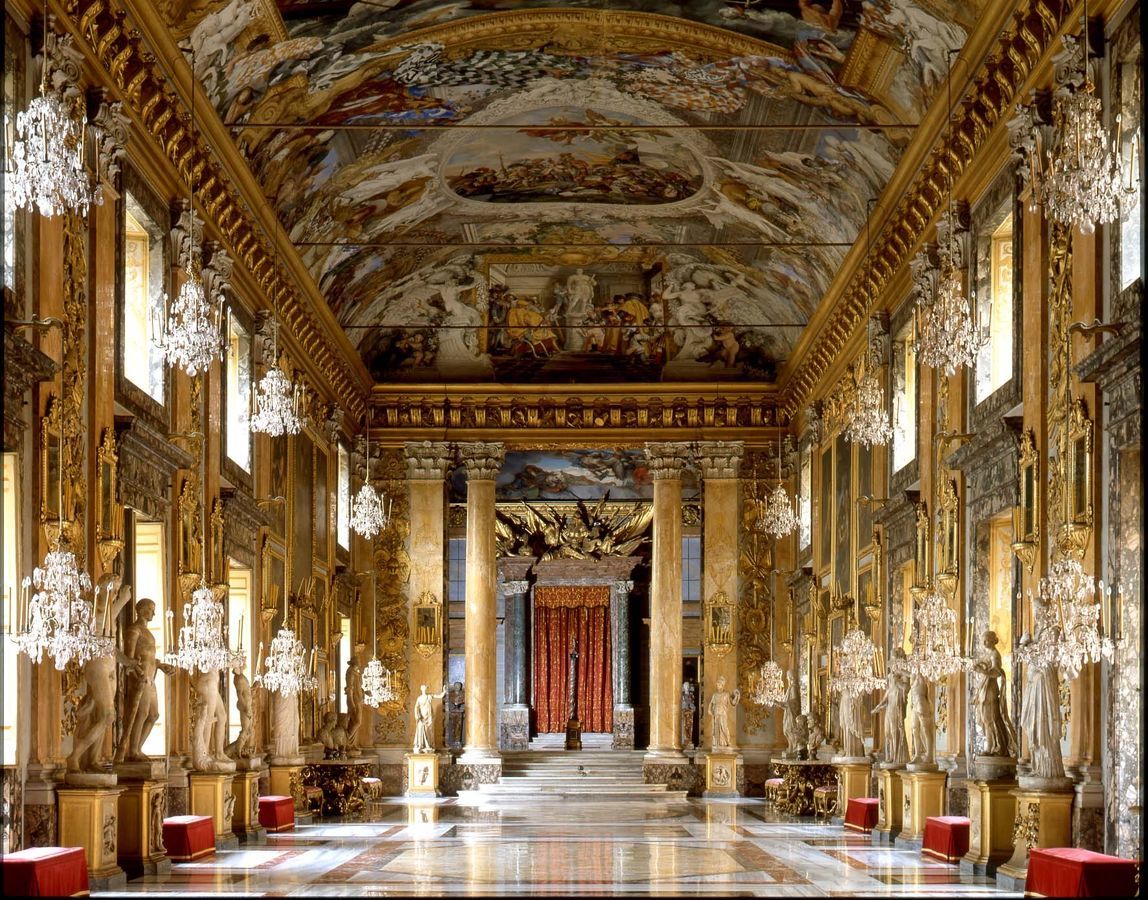
Powerful Roman families in the 16th and 17th centuries prided themselves on their collections of classical statuary, and they had no qualms about bringing in a sculptor of their own to replace missing hands, arms, heads and noses. Hence many of the remarkable ancient statues displayed in this gallery of collections from four local dynasties look surprisingly intact. There's an Ares patched up by Bernini, and an Athena returned to her full glory by Alessandro Algardi. You can also have your say on the great Ludovisi throne controversy: is this marble chair with its exquisite Aphrodite relief a 5th-century BC masterpiece or a more modern hoax? (The jury of experts is still out). The ticket includes entrance to Crypta Balbi, Palazzo Massimo and the Baths of Diocletian.
Powerful Roman families in the 16th and 17th centuries prided themselves on their collections of classical statuary.
Address: Piazza di Sant'Apollinare 46, 00186
Opening times: Tue-Sun, 9am-7.45pm
Price: €7; EU citizens aged 18-25, €3.50; children under 18, free. Price varies during special exhibitions
Payment type: credit cards accepted
Reservations: not necessary
Palazzo Massimo alle Terme

This 19th-century palazzo – formerly a Jesuit school – houses another of Rome's truly superlative collections of classical art. Roman and Greek sculptural masterpieces on the ground and first floors include a fine Discus Thrower and Augustus as High Priest. There's also a rare Roman (rather than Egyptian) mummy from Grottarossa, in Rome's northern periphery. The ancient Romans were fascinated by all things Egyptian, but though they imported obelisks and pyramids (there's one still standing in the Testaccio district) they didn't go in for embalming. The one exception – known as the Mummy of Grottarossa – is here. But it is the second-floor reconstructions of rooms from luxurious ancient houses, complete with brightly-coloured wall decoration, that is this museum's real high point. The leafy, plant-and-bird-filled triclinium (dining room) from Livia's villa north of Rome is spectacular. The ticket includes entrance to Crypta Balbi, Palazzo Altemps and the Baths of Diocletian.
The leafy, plant-and-bird-filled triclinium (dining room) from Livia's villa north of Rome is spectacular.
Address: Largo di Villa Peretti, 00185
Opening times: Tue-Sun, 9am-7.45pm
Price: €7; EU citizens aged 18-25 ,€3.50; children under 18, free. Price varies during special exhibitions
Payment type: credit cards accepted
Reservations: not necessary
Villa Farnesina

Agostino Chigi, banker to big-spending Pope Julius II, threw the wildest parties of the early 16th century in this pleasure villa he had built on the banks of the Tiber. When not partying, he filled the rooms with exquisite art and commissioned Raphael to fresco the place with classical scenes. The artist was too busy consorting with his lover Margherita, daughter of a Trastevere baker, to do much work himself, but his students carried out his designs to the letter, most impressively in the Loggia of Psyche, where the garlands of fruit and flowers include species that had only recently arrived from the New World. By 1577 the Chigi family was bankrupt and the villa was sold to the Farnese clan, hence the name change. It's now home to a prestigious scientific and cultural academy.
Agostino Chigi threw the wildest parties of the early 16th century in this pleasure villa he had built on the banks of the Tiber.
Address: Via della Lungara 230, 00165
Opening times: Mon-Sat, 9am-2pm
Price: €6; children 14-18, over 65s, €5; children 10-14, €3; under 10, free. Gardens, €2
Payment type: credit cards accepted
Reservations: not necessary
Villa Giulia
When the Romans vanquished the highly cultivated Etruscan people who ruled central Italy before them, they worked hard to expunge their memory. But this still mysterious culture finds an eloquent voice via the glorious artefacts housed in this delightful mid-16th-century villa. The life-size husband and wife from Cerveteri reclining on the lid of their sarcophagus look like they'd be fun to hang out with; the statues of gods from the temple at Portonaccio are remarkable for how lifelike they look. In the garden of this beautiful 16th-century villa, built for Pope Julius III, is a nympheum and a very pleasant bar – useful in a venue so far from other sources of sustenance.
The statues of gods from the temple at Portonaccio are remarkable for how lifelike they look.
Address: Piazzale di Villa Giulia 9, 00196
Opening times: Tue-Sun, 8.30am-7.30pm
Price: €8; EU citizens aged 18-25, €4; under 18, free
Payment type: credit cards accepted
Reservations: not necessary